
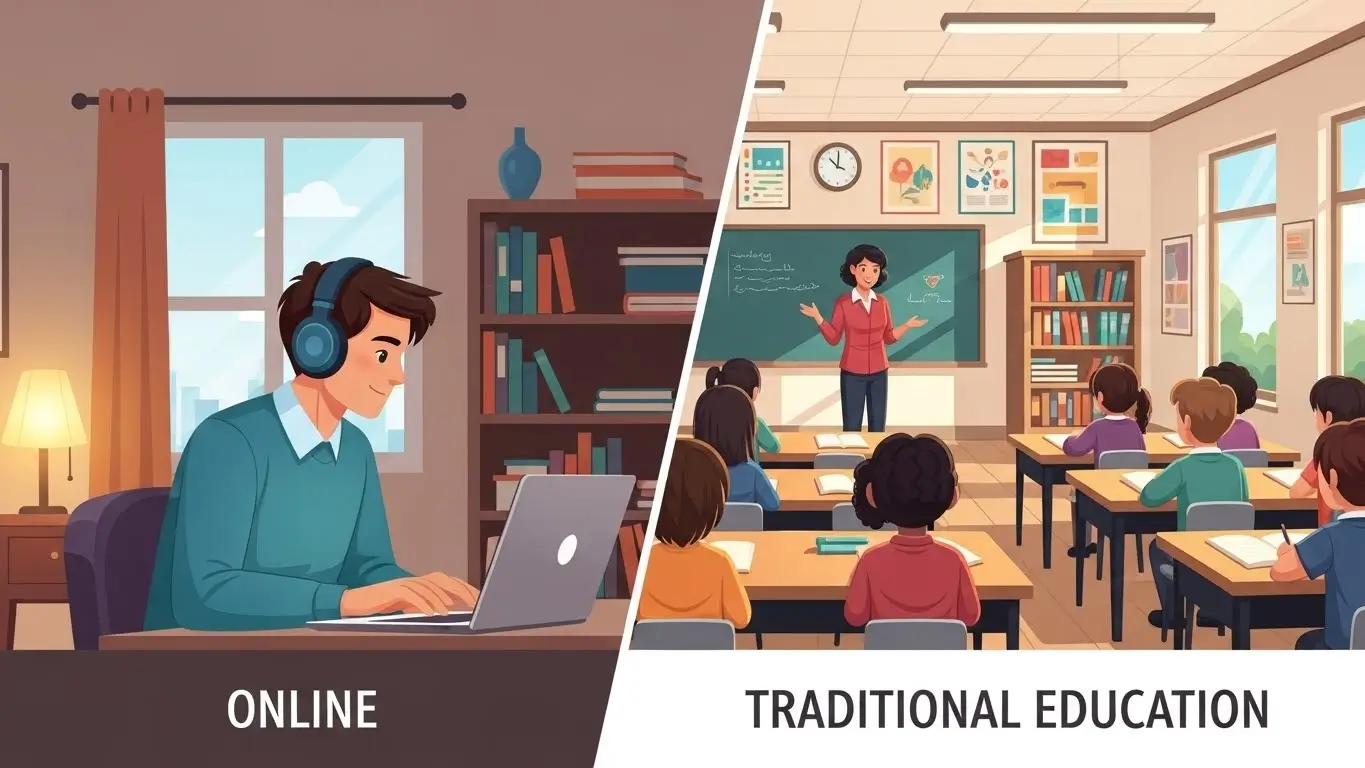
Online Education vs Traditional Classroom Learning: Pros, Cons, and Key Differences
1. Flexibility and Convenience
Online Education
One of the biggest benefits of online learning is its flexibility. Students can attend classes from anywhere and often at any time, making it an ideal option for learners who balance education with work, sports, or personal responsibilities. Many online courses support self-paced learning, allowing students to revisit lessons and learn at their own speed.
Traditional Education
Traditional classroom education follows a fixed schedule. Students must attend classes at specific times, which creates structure and routine. While this reduces flexibility, it helps learners maintain discipline, consistency, and time management.
Key Takeaway:
If flexibility and convenience are your priorities, online education is the better choice. If you thrive in structured environments, traditional education may suit you more.
2. Learning Environment and Student Interaction
Online Education
Online learning environments can sometimes feel isolating. Although many platforms offer discussion forums, video conferencing, and group assignments, real-time physical interaction with teachers and classmates is limited.
Traditional Education
Traditional classrooms promote face-to-face interaction, active discussions, and immediate feedback from teachers. Students also develop essential social, communication, and teamwork skills through daily in-person engagement.
Key Takeaway:
For collaborative learning and social development, traditional education has a clear advantage.
3. Accessibility of Learning Resources
Online Education
Online education provides access to a wide range of digital resources, including video lectures, e-books, interactive quizzes, and global subject experts. Students can explore topics beyond the standard curriculum and learn independently.
Traditional Education
Traditional schools offer structured access to physical resources such as laboratories, libraries, sports facilities, and extracurricular programs. Direct guidance from teachers and mentors is especially valuable for complex or practical subjects.
Key Takeaway:
Online education excels in digital accessibility, while traditional education offers hands-on and guided learning experiences.
4. Cost and Affordability
Online Education
Online courses are generally more affordable. Students save on commuting, accommodation, uniforms, and other institutional expenses. Many reputable platforms also offer free or low-cost courses.
Traditional Education
Traditional education often involves higher costs, including tuition fees, transportation, uniforms, and activity expenses. However, these costs contribute to a comprehensive learning experience that includes facilities and in-person support.
Key Takeaway:
Online education is typically more budget-friendly, while traditional education provides a full campus-based experience.
5. Learning Outcomes and Discipline
Online Education
Success in online learning depends heavily on self-discipline, motivation, and time management. Without regular supervision, some students may find it challenging to stay focused or complete coursework on time.
Traditional Education
Traditional classrooms provide regular supervision, scheduled lessons, and peer accountability. Teachers can monitor progress closely and offer timely intervention when students struggle.
Key Takeaway:
Self-motivated learners often excel in online education, while students needing guidance benefit more from traditional classrooms.
Conclusion: Which Learning Method Should You Choose?
Both online education and traditional education offer valuable learning opportunities. Online learning stands out for its flexibility, affordability, and access to digital resources, making it ideal for independent and self-driven learners. Traditional education, on the other hand, provides structured learning, social interaction, and hands-on experiences that support holistic development.
Ultimately, the right choice depends on your learning preferences, academic goals, and daily routine. Many students now opt for blended learning, combining online and traditional education to benefit from both approaches.